+90 548 839 98 19
+90 548 840 98 19
İskele, KKTC
Pzt-Cum: 09:00-17:00 | Cts: 09:00-14:00

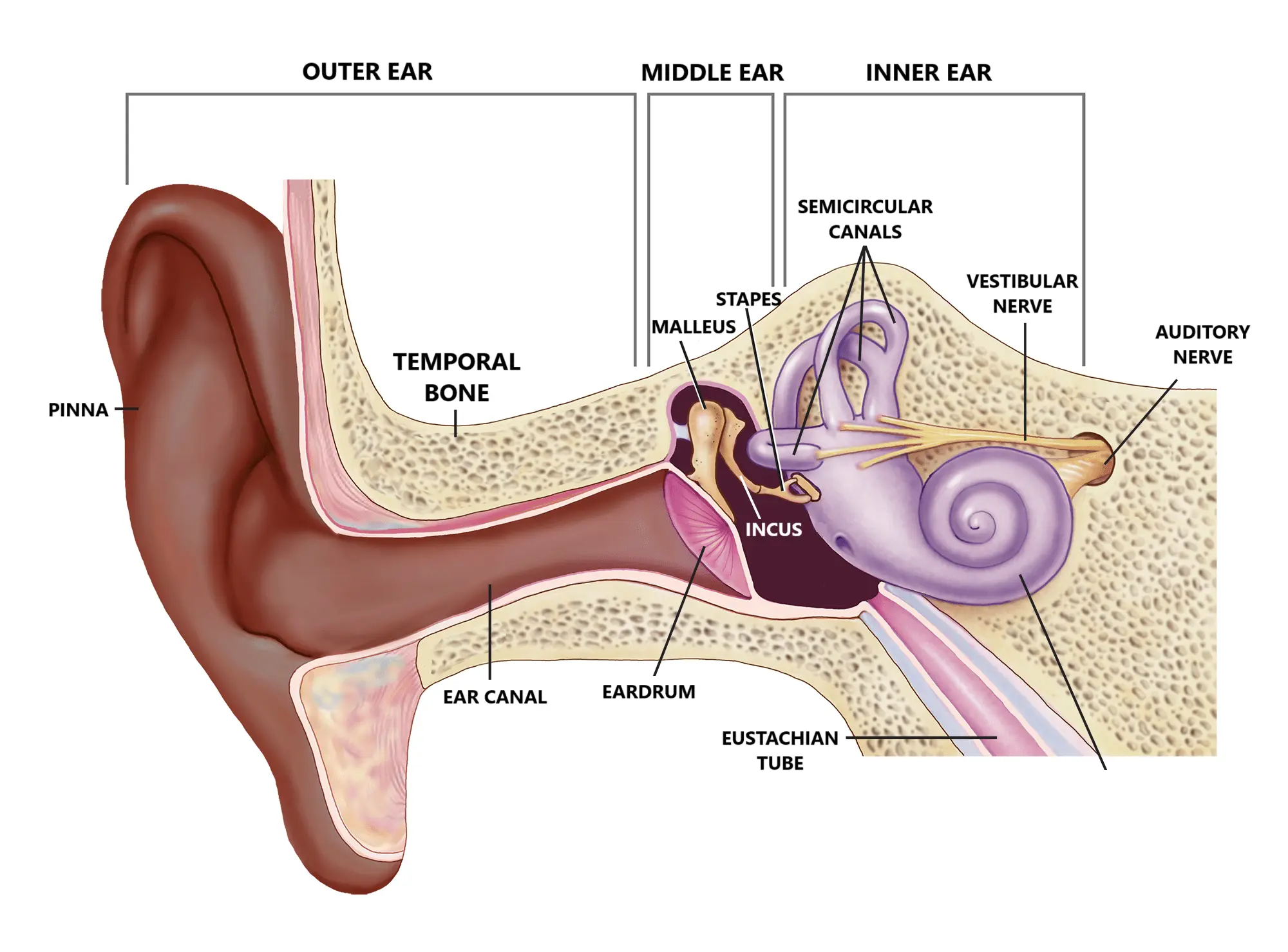
Sound waves reach the outer ear and are transmitted through the ear canal to the eardrum, causing it to vibrate. The vibrations are transferred by the 3 small ear bones in the middle ear to the fluid in the inner ear. The fluid moves the hair cells (stereocilia) and the movement of these cells produces nerve impulses, which are carried to the brain by the cochlear nerve. The auditory nerve takes the impulses to the brain stem, which sends them to the midbrain. Finally, the signal travels to the auditory cortex of the temporal lobe to be interpreted as sound.
Hearing loss is a partial or total inability to hear. Hearing loss may be present at birth or acquired at any time afterwards. Hearing loss may occur in one or both ears. In children, hearing problems can affect the ability to acquire spoken language, and in adults it can create difficulties with social interaction and at work. Hearing loss can be temporary or permanent. Hearing loss is diagnosed when hearing testing finds that a person is unable to hear 25 decibels in at least one ear. Testing for poor hearing is recommended for all newborns.Hearing loss can be categorized as mild (25 to 40 dB), moderate (41 to 55 dB), moderate-severe (56 to 70 dB), severe (71 to 90 dB), or profound (greater than 90 dB).
If you suspect you have hearing loss, make an appointment for a hearing test at our Iskele Hearing Center in Cyprus. Check out the symptoms and signs of hearing loss.