+90 548 839 98 19
+90 548 840 98 19
İskele, KKTC
Pzt-Cum: 09:00-17:00 | Cts: 09:00-14:00

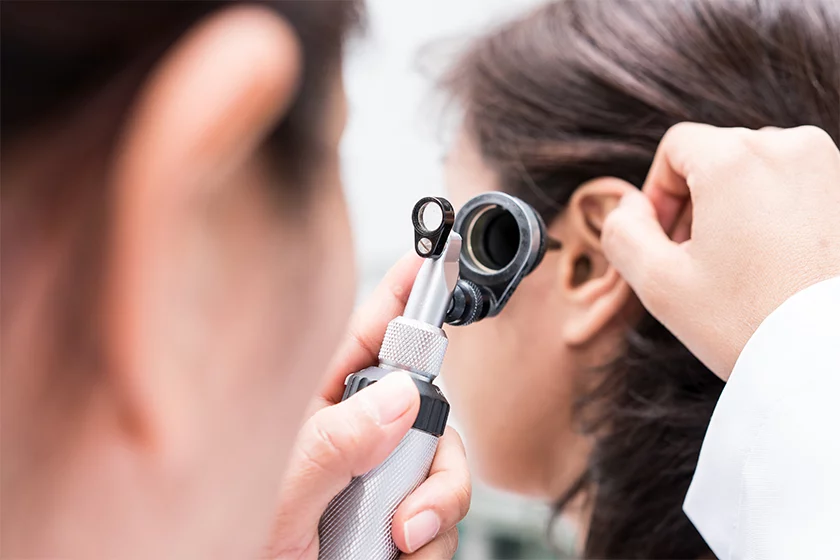
Hearing loss in children can be attributed to a variety of etiologies, and the cause is sometimes unknown. It may be congenital (i.e., present at birth) or acquired (i.e., develops after birth). Hearing loss due to genetic causes may present at birth or develop later in life. Although each child is unique, the following are the general stages of communication development in babies and children with normal hearing.
Startle in reaction to a loud noise
Relax, calm down when hearing familiar voices
Pay attention to familiar voices
Cry differently to express different needs
Make sounds to express pleasure (cooing)
Play at making sounds like “aah” and “ooo”
Move or wake up to the sound of voices when sleeping
Turn the head when their name is said or there’s a noise, even if they don’t see you
Play at making sounds that progressively begin to resemble words/speech
React and turn head when name is said
Understand common words like “no” and “bye-bye”
Repeat simple words and sounds
Try to grab or point to familiar objects when the objects are named
Understand simple instructions
Imitate familiar animal sounds
Correctly say “dada” or “mama”
Regularly use seven real words or more
At 18 months, 25% of the child’s speech should be intelligible
Have a vocabulary of 50 to 250 words
At 2 years old, 50 to 75% of the child’s speech should be intelligible
Name just about anything with one word
Have conversations with self or with toys
Have a vocabulary of 450 words
Construct sentences of 4 or 5 words
Follow conversations
At 3 years old, 75 to 100% of the child’s speech should be intelligible
Some of the most common causes of hearing loss in babies and children are;
Lack of startle to loud noises
Absence of reaction to sounds
Lack of attempts to find the source of a sound
Paying attention to some sounds and not others
Interruption in babbling and making new sounds
Delayed speech and/or language development
Speech sound disorder
Difficulty in following or understanding instructions
Frequent requests for repetition
Use of increased volume on the TV or other listening devices
Difficulty effectively expressing themselves
Academic, behavioral, or social difficulties at school (e.g., concerns regarding literacy, pragmatic and social communication skills, and executive functioning) If you are concerned about your child's development and suspect hearing loss, make an appointment for a hearing test at our ISKELE HEARING CENTER in Cyprus. Check out the causes of congenital or acquired hearing loss in infants and children.